Gas prices going up? What to do before and after a hike
On October 5, 2026 at 12:15 a.m., 281 stations in the Montreal area raised the price of regular in the same minute. But 138 others kept the old price until the wave was over. Here's what the data shows, and how to make the most of it.
 By The Gazo team
6 min read
By The Gazo team
6 min read
In this article
When gas prices go up, it almost never happens everywhere at once. Quebec is where you can see it best: since April 1, 2026, every station has had to report its prices to the Régie de l'énergie (opens in a new tab) as soon as they change, and Gazo keeps track of every change. So we can watch a wave of price hikes spread, station by station. What it shows changes how you should react, wherever you live in Canada.
A gas price hike, minute by minute
On Monday, October 5, 2026, at 12:15 a.m., Gazo detected a wave of price hikes in the Montreal area. In the same minute, 281 stations raised the price of regular, usually by 10¢. Then things slowed down: 60 stations followed between 12:20 and 12:35 a.m., and 48 more between 11:55 a.m. and 1 p.m. In all, 389 stations went up, 353 of them to 204.9¢/L.
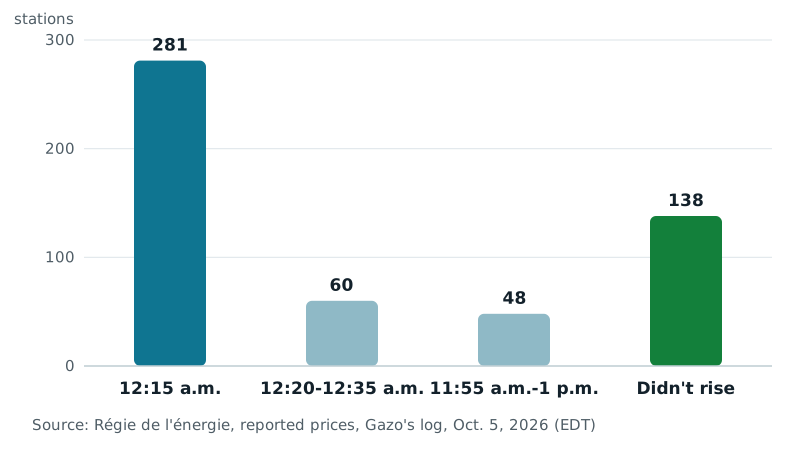
The most useful number is the last one: 138 stations didn't go up during the whole wave, about one in four. For almost 13 hours, you could fill up at the old price without leaving your area. On 50 litres, 10¢ less per litre is $5.
Montreal: four waves in 36 hours
What came next shows how fast prices move. On October 5 at 11:55 a.m., a wave of price drops began: 424 stations came back down by the end of the evening, by a median of 7¢. At 9:45 p.m., a new 10¢ hike: 437 stations went up, 335 of them around 3 a.m. on October 6. And at 10:50 a.m., another 10¢ drop in Montreal, while 33 waves of hikes hit other Quebec regions between 10:50 a.m. and 2:10 p.m., from Trois-Rivières to Sherbrooke, and from Drummondville to Saguenay.
Two takeaways. First, both hikes hit overnight, at 12:15 a.m. and around 3 a.m., so filling up the evening before would have beaten both. If you're wondering whether gas prices are going up tonight, check before bed: in Quebec, Gazo shows each change a few minutes after the station reports it. Second, a hike isn't always here to stay: in Montreal, the first one was partly wiped out less than 12 hours later. For current prices, see our pages for gas prices in Montreal and Quebec City.
How often do gas prices go up?
To look beyond two days, we took NRCan's daily average prices (opens in a new tab) from August 5 to October 5, 2026 (44 business days).
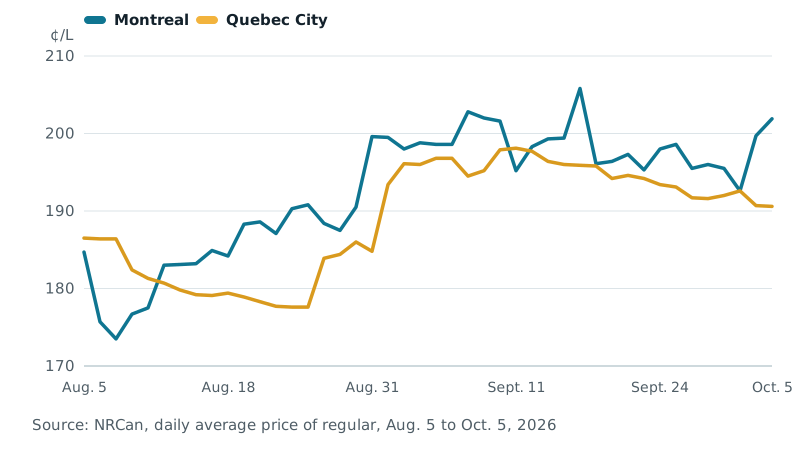
Over that period, the average price jumped by 5¢ or more from one business day to the next 4 times in Montreal, twice in Quebec City and once in Sherbrooke and Trois-Rivières, but 7 times in Gatineau, 5 times in Toronto and 8 times in Calgary. How often it happens depends a lot on the city, and so does the price level, as we explain in why gas is more expensive in Quebec. In Montreal, those hikes came on August 12, August 31, September 17 and October 2.
Those sudden jumps followed by slow declines are what's called a price cycle. The Competition Bureau explains (opens in a new tab) that nearby stations changing prices at the same time aren't necessarily colluding: they post their prices on big signs and react to each other. An agreement to fix prices is illegal, but it takes evidence to prove one exists.
Are gas prices going up tomorrow?
Nobody knows for sure. According to NRCan, anything that affects the supply of crude oil or gasoline (opens in a new tab), from a war to a hurricane or a refinery outage, shows up at the pump, and the effect is immediate. Some increases are announced ahead of time, though:
- Taxes. The federal excise tax, now suspended, is set to come back at 5¢ a litre on February 1, 2027, then 10¢ on April 1, 2027: details in our guide to gas taxes in Canada and Quebec. Provincial changes, like Alberta's fuel tax relief, are announced too.
- Wholesale prices. When the rack price climbs for a few days, stations generally end up following.
In Gazo, the forecast for tomorrow only shows in Quebec if the model has proven itself: 65% accuracy over 30 days, and better than predicting "stable" every day. Otherwise, Gazo says "no clear trend." Be wary of posts announcing a hike "tomorrow" with no source.
What to do when gas prices are going up
- Don't rush to fill up if your tank is three-quarters full. The gain is small: 10¢ on 15 litres is $1.50.
- If it's low, look for stations still at the old price. On October 5, 138 were left in the Montreal area. In Quebec, Gazo's free "Prices are going up" banner lists them under "Still at the old price near you," with a "Go" button.
- Don't make a big detour. On 50 litres, saving 10¢ is worth $5: a 15 km round trip in the city eats up almost half of it.
- Check Costco. During the October 5 wave, none of them raised their price: that's often where the gap is widest, as we measured in our look at Costco gas.
For the rest of the year, the day of the week matters less than which station you pick, as our analysis of the best day to buy gas in Quebec shows.
And after the hike?
Sometimes, prices come back down fast. In Montreal, after the September 17 hike (+6.4¢ on average, according to NRCan), the average price fell 9.7¢ the very next day. Sometimes they don't: after the August 31 hike (+9.1¢), it stayed above 195¢/L until October 1. There's no way to know in advance which one you'll get.
The green "Prices are dropping" banner, also free, flags waves of price drops and the stations that already have the new price. With Gazo+, you can also get a notification when a wave of hikes starts in your area, and alerts when the price falls below your target. The full picture is in how Gazo works.
Sources
Facts checked against these official or recognized sources.
- Régie de l'énergie, "Foire aux questions : pour les consommateurs" (prices reported as soon as they change, in French): regie-energie.qc.ca (opens in a new tab) (accessed October 6, 2026)
- Régie de l'énergie, prices of regular reported by Quebec stations (regieessencequebec.ca), change log and waves detected by Gazo, October 5, 2026 at 12:15 a.m. to October 6, 2026 at 4 p.m. (Eastern time); Gazo calculations (internal data)
- Natural Resources Canada, "Daily Average Retail Prices for Regular Gasoline" by city, business days from August 5 to October 5, 2026 (data read by Gazo): www2.nrcan-rncan.gc.ca (opens in a new tab) (accessed October 6, 2026)
- Competition Bureau Canada, "Gasoline prices: Illegal activity versus normal competition — What is and isn't price-fixing": competition-bureau.canada.ca (opens in a new tab) (accessed October 6, 2026)
- Natural Resources Canada, "Why gasoline prices go up and down?": natural-resources.canada.ca (opens in a new tab) (accessed October 6, 2026)
- Department of Finance Canada, "The Government of Canada extends the federal fuel excise tax relief on gasoline, diesel and aviation fuels for Canadians," September 2, 2026: canada.ca (opens in a new tab) (accessed October 6, 2026)